This page was translated from the Japanese page by AI. If the content differs from the Japanese page, the Japanese page is correct. 日本語

Numazu Autumn Festival Asian Marché / Special Guest / Stage Timetable (Planned)

One person,
two voices.

Baatarjav Bold-ErdeneBAATARJAV BOLD-ERDENE

Morin khuur & khoomei performer / Cultural Ambassador of Mongolia

Sun 11.22 ① 11:10–11:40 ② 17:10–17:40 Numazu Nakamise Shopping Street | Free admission
Special Guest

The day the wind of the steppe blows
through a Numazu shopping street.

Baatarjav Bold-Erdene was born in a rural village in Mongolia and grew up helping care for livestock at his nomadic grandparents' ger. Playing at imitating sheep and goats, he picked up khoomei on the steppe without ever being taught by a teacher.

In 2001 he won a khoomei competition in Mongolia. After performing with the Mongolian National Song and Dance Ensemble, he came to Japan in 2006 and has been performing and teaching across the country ever since. In 2025 he became Mongolia's Cultural Ambassador. On 11/22, he brings his voice and the sound of the morin khuur live to Nakamise.

Order of the Red Banner of LaborReceived in 2024
Cultural Ambassador
of Mongolia
Appointed in 2025
20 years in JapanPerforming and teaching nationwide since 2006
Baatarjav Bold-Erdene playing the morin khuur in a red traditional costume
Bold-Erdene performing (photo courtesy of the organizer)
What is Khoomei

Khoomei means
singing a chord by yourself.

While sustaining a low tone in the throat, the singer changes the resonance inside the mouth to layer a high, whistle-like melody on top. Two sounds heard at the same time from one person—that is "khoomei", the traditional Mongolian way of singing. It was inscribed on the UNESCO Intangible Cultural Heritage list in 2010.

Low voice = the horizonA deep, steady drone that keeps sounding at the back of the throat
High voice = the mountain ridgeA sparkling melody born from the resonance inside the mouth
His Story

Starting with imitating sheep:
a voice like no other in the world

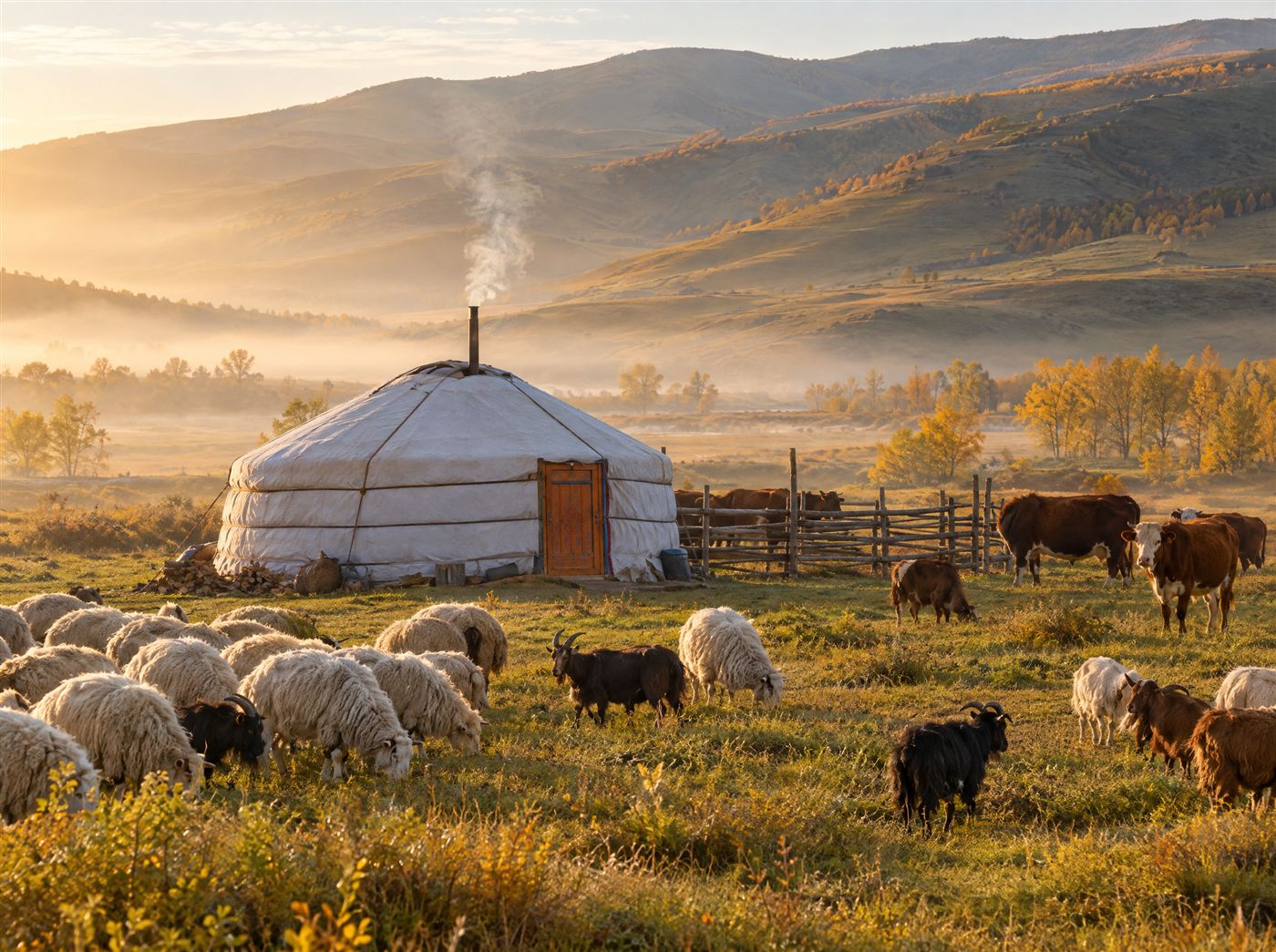
A white ger standing on the morning steppe with flocks of sheep, goats and cattle (illustrative image)Illustrative image
01

A boy raised in a nomad's ger

He was born in a rural village in Mongolia and grew up at his nomadic grandparents' ger (a portable dwelling), helping to care for the sheep, goats and cattle.

His playmates were the animals. Imitating their calls, he gradually learned the feeling of producing several sounds from his throat. He never studied with a teacher. The steppe itself was his first classroom.


A flat horizon and a mountain ridge edged in gold (illustrative image)Illustrative image
02

The distant landscape was his sheet music

When practicing, he is said to have treated the distant landscape as a musical score. The straight horizon was the low tone, and the jagged mountain ridge was the high tone. Tracing them with his eyes, he painted the landscape with his voice.

Horizon = low tone, mountain ridge = high tone.
The mechanism of khoomei is the landscape of the steppe itself.

A horse turning its ears toward its rider's voice on the evening steppe (illustrative image)Illustrative image
03

A song that horses turn their ears to hear

When he sings on horseback, the horse turns its ears toward him and listens—so he says himself.

A voice that has reached not only people but the animals of the steppe. At this performance, you can bathe in that sound right in front of the shopping street stage.

Live khoomei that resonates up from your feet.

Feel the vibration in the air that recordings can't fully convey.
Illustrative image
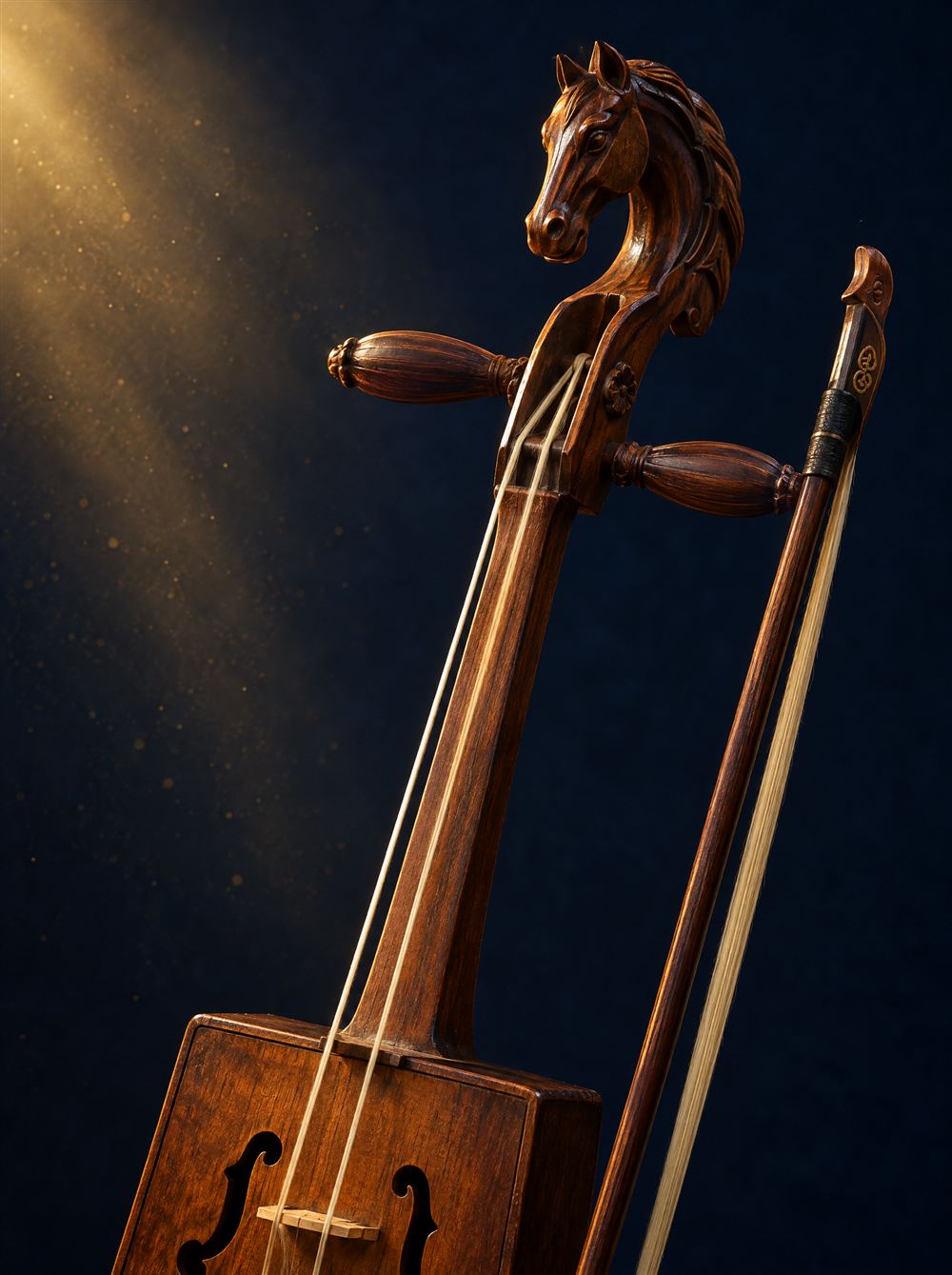
A morin khuur with a carved horse's head, and its bow (illustrative image)Illustrative image
Morin Khuur

The instrument from "Suho's White Horse",
with its real sound.Morin khuur (horse-head fiddle)

A Mongolian instrument with a carved horse's head at the top of its neck, whose 2 strings are played with a bow. Its deep, expansive tone has earned it the nickname "cello of the steppe", and it was inscribed on the UNESCO Intangible Cultural Heritage list in 2008. It is the instrument familiar from the story "Suho's White Horse".

Besides performing, Bold-Erdene also makes morin khuurs and teaches at classes in various places.

  • 1
    Try to tell the low and high voices apartIn khoomei, a high melody rides on top of a continuous low tone.
  • 2
    Look for the instrument's "horse head"The carving at the top of the neck is where the name "horse-head fiddle" comes from.
  • 3
    2 chances: midday and evening2 shows, at 11:10 and 17:10. Come whenever suits you.
Career

From the steppe to Cultural Ambassador of Mongolia

  1. 2000
    Khoomei singer with the Mongolian National Song and Dance EnsembleMember until 2006
  2. 2001
    Wins a khoomei competition in Mongolia
  3. 2004
    Releases the CD "Spirit of Skyland"
  4. 2006
    Comes to JapanPerforms and teaches nationwide. Also makes morin khuurs and teaches at classes such as the 佐倉 Morin Khuur Class
  5. 2015
    Forms the traditional music group "Ikh Tatlaga"
  6. 2018
    Mongolian Cultural Merit Award
  7. 2024
    Receives the Order of the Red Banner of Labor
  8. 2025
    Appointed Cultural Ambassador of Mongolia
  9. 2026
    11/22, to Numazu Nakamise Shopping StreetSpecial guest of the Numazu Autumn Festival Asian Marché
Listen

Preview his voice before the day

Click the image to play the YouTube video.

Khoomei (Bold-Erdene)From the 2016 spring Mongolian cultural exchange event "Radiance of the Great Steppe"
Bold-Erdene's beautiful khoomei and morin khuur
B. Bold-Erdene
The Legend

About "Suho's White Horse"

A Mongolian folktale about how the morin khuur came to be. In Japan it is widely known through a picture book and elementary school Japanese-language textbooks.

  1. 1

    Suho, a poor boy who herds sheep on the steppe, finds a newborn white foal and raises it with great care.

  2. 2

    Riding the grown-up white horse, Suho wins a horse race held by the lord. But the lord breaks his promise to marry the winner to his daughter, tosses Suho a few silver coins, and takes the white horse away.

  3. 3

    The white horse throws the lord off and escapes, but his pursuers shoot it with arrows. Covered in wounds, it makes it back to Suho and then breathes its last.

  4. 4

    The white horse appears in the grieving Suho's dream and tells him: "Make an instrument from my bones and hide, my sinews and hair. Then I can stay by your side forever."

  5. 5

    The instrument Suho made just as he was told is the morin khuur. That is why there is a horse's head carved at the top of its neck, and the sound Suho played moved the hearts of people all across the steppe—so the story goes.

How it is known in Japan

The picture book, retold by 大塚勇三 and illustrated by 赤羽末吉, was published by 福音館書店 in 1967 and is a long-selling classic read by generation after generation. It has also appeared for many years in the 2nd-grade elementary school Japanese-language textbook (光村図書), so a great many people say "I know the name" or "I read it in class".

Note: the Mongolian legend "Khuukhuu Namjil"

The "Suho" story known in Japan is based on a tale told in the Inner Mongolia Autonomous Region of China (there are various theories about its origins). In Mongolia, a different legend, "Khuukhuu Namjil", is better known as the origin of the morin khuur.

Live in Numazu

Sun 11.22 Numazu Nakamise Shopping Street

Special guest of the Numazu Autumn Festival Asian Marché 2026. Free admission.

1st show11:10–11:40
2nd show17:10–17:40
Date
Sun, 2026/11/22 Event hours 11:00–21:00
Venue
Numazu Nakamise Shopping Street (a short walk from the South Exit of JR Numazu Station)
Fee
Free admission

※ Performance times may change. Updates will be posted on our official Instagram @numazu_asian_festival.

※ Images marked "illustrative image" and the background video at the top of the page were created with generative AI. They are not photographs of real landscapes, people or instruments. Photos of the performer himself were provided by the organizer.